Guide
Why is my Viking ice maker not working?
The short answer
First check the simple things: the ice maker's shutoff arm or switch is on, the freezer is actually cold (ice makers stop below-spec temperatures), and the water supply valve behind or under the unit is open. If ice production doesn't resume within a day, the fault is usually the ice maker module itself, the water inlet valve, or — after a power outage — surge damage, and those need a technician.
How the problem usually shows up
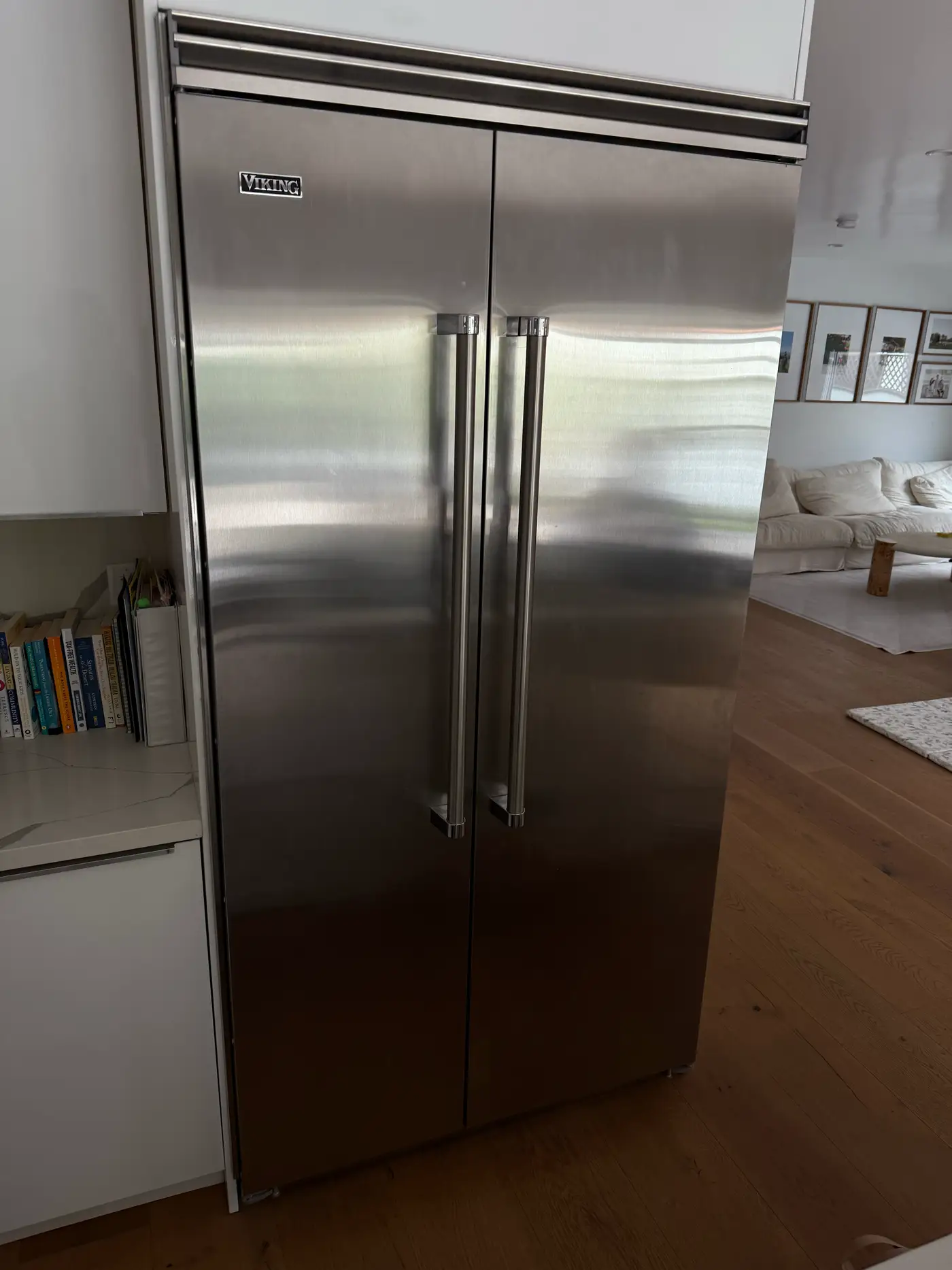
Viking ice makers rarely fail loudly. Production slows over weeks, cubes come out small or hollow, or the bin simply stops refilling. Sometimes the failure is sudden — most often right after a power outage, which is a pattern we see repeatedly on these units.
Checks that are safe to do yourself
- The shutoff arm or switch. A raised wire arm or an off switch is still the most common 'failure' we get called for. Make sure it is in the on position.
- Freezer temperature. Ice makers need the compartment at proper freezing temperature to cycle. If the freezer feels warm, the ice maker is a symptom — the cooling problem comes first (see our Viking cooling guide).
- Water supply. Confirm the water shutoff valve serving the refrigerator is open and the dispenser (if present) still pours. No water at the dispenser and no ice together point to supply or inlet-valve trouble.
- Give it time. After any change — temperature recovery, water restored, power back on — a cycle can take up to 24 hours to resume.
What we actually find on service calls
- A failed ice maker module. The motor, thermostat or ejector inside the unit wears out; the fix is replacing the ice maker assembly. On a recent Marina del Rey job this took about 40 minutes.
- Surge damage after an outage. Power events can kill the ice maker's control side while the rest of the refrigerator runs fine. A surge protector is cheap insurance afterwards.
- A stuck or failed water inlet valve. The valve that meters water into the mold sticks closed (no ice) or half-open (small, hollow, or frozen-together cubes).
- Frozen fill tube. A slow fill can freeze inside the tube and block everything behind it. Clearing it without damaging the tube — and fixing the slow fill that caused it — is technician work.
What not to do
Don't chip ice out of the mold with anything sharp, don't disassemble the module, and don't work on the inlet valve — it sits at the water connection and mistakes flood kitchens. If the safe checks above don't bring ice back within a day, stop there.
What a professional visit looks like
We verify freezer temperature, test the water path from valve to mold, and test the module's cycle electrically. You get a clear quote before any repair; most ice-maker replacements are completed in a single visit, backed by a 1-year warranty (up to 2 years on select repairs). Same-day or next-day appointments across the South Bay — call or text (310) 361-3551.
See how this played out on a real job: Viking Ice-Maker Replacement in Marina del Rey.
Related service: Viking repair. Reviewed by our technical team. This guide describes safe owner-level checks only; refrigerant, gas and electrical work must be left to a professional.