Guide
Sub-Zero EC40 and EC50 Error Codes Explained
The short answer
EC40 and EC50 are Sub-Zero error codes tied to the evaporator and defrost side of the cooling system — EC40 for the refrigerator circuit and EC50 for the freezer circuit. Seeing one means the control detected that a compartment is not cooling or defrosting the way it should. Note the code, check that doors are sealing and vents are clear, and clean the condenser grille if your manual shows how; if the code returns or the Service light stays on, book a diagnostic rather than clearing it repeatedly.
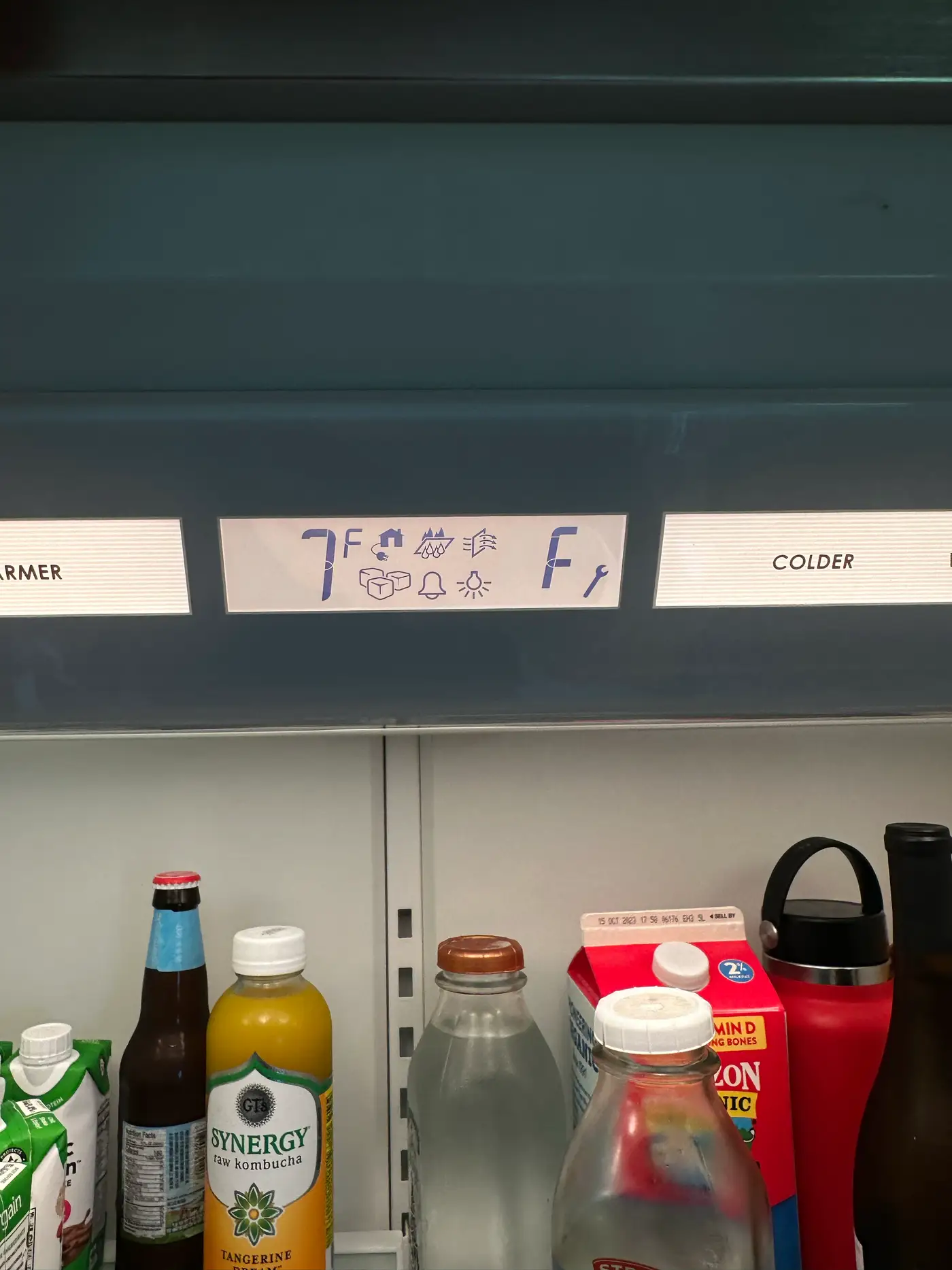
What these codes are telling you
Sub-Zero's electronic controls on the 600 series and built-in (BI) models continuously watch each cooling circuit. Because these units use dual refrigeration — the refrigerator and freezer each have their own compressor and evaporator — the control can flag each circuit separately. EC40 points at the refrigerator-side evaporator and defrost operation; EC50 points at the freezer side. In plain terms, the control ran a compartment's cooling or defrost cycle and did not see the temperature behavior it expected at the evaporator.
The code usually appears alongside a flashing Service indicator. The unit will often keep running in the meantime, which tempts people to ignore it — but the code exists precisely because a slow-building problem was caught before food loss. Treat it as an early warning, not a nuisance.
How it typically presents
Some owners spot the code before noticing any symptom at all. Others see it together with a compartment running a few degrees warm, frost accumulating heavier than usual, longer compressor run times, or an evaporator fan that sounds different. Because each code maps to one circuit, an EC50 with a perfectly cold refrigerator section is entirely consistent — the two sides cool independently.
What actually causes an EC40 or EC50
- Frost overwhelming the evaporator. The most common story: the defrost cycle falls behind or fails, frost builds on the evaporator coil, airflow through the coil drops, and the control flags the circuit. The underlying trigger can be a failed defrost heater or its control circuit.
- Evaporator fan problems. If the fan that moves air across the evaporator slows or stops, the coil ices while the compartment warms — the exact pattern the control is designed to catch.
- Door seal and usage issues. A leaking gasket or a door left ajar loads the compartment with humid air, producing frost faster than the defrost cycle can clear it.
- Sensor faults. The control depends on thermistors to judge evaporator temperature; a drifting or failed sensor can trigger the code or mask a real problem.
- Restricted condenser airflow. A dirty condenser stresses the whole cooling circuit and can contribute to the temperature behavior that sets the code.
- Sealed system faults. Least common: low refrigerant or a compressor issue on that circuit will also prevent the evaporator from performing to spec. This is the possibility a professional needs to rule in or out.
Safe steps before you call
- Write down the exact code and which compartment it references — and whether it comes back after the unit runs.
- Confirm power is steady and the breaker has not tripped.
- Review the control settings so you know the set points are normal.
- Inspect the door gaskets and make sure each door closes and seals on its own; clear anything that could hold a door slightly open.
- Check that interior vents and the exterior grille are unobstructed.
- Clean the accessible condenser grille following your owner's manual — this is standard Sub-Zero owner maintenance and resolves some marginal cases.
What not to do
Do not repeatedly reset the unit to make the code disappear; you erase useful history while the underlying fault keeps developing. Do not chip or pry ice off an evaporator — the coil is easily punctured, and a punctured coil turns a defrost repair into sealed system work. And leave anything behind panels alone: defrost heaters and fan circuits carry live voltage, and the refrigerant loop must never be opened outside proper recovery equipment. There is no owner-serviceable fix for the components these codes usually implicate.
When to stop and call
Call when the code returns after your basic checks, when the Service light will not clear, or when it is paired with a warm compartment or unusual fan noise. An early appointment while the unit still holds temperature is a far calmer repair than one that starts with a freezer full of thawing food.
What the diagnostic looks like
A technician will read the control's error history, inspect the flagged evaporator for frost pattern — the shape of the ice buildup itself points to the cause — test the defrost heater and its circuit, verify the evaporator fan, check the sensors against actual temperatures, and confirm the compressor and refrigerant side of that circuit are healthy. Because EC40 and EC50 each isolate one circuit, the diagnosis is usually focused and efficient.
Repair versus replace
For a built-in 600 series or BI unit, the components behind these codes — heaters, fans, sensors, boards — are all repairable, and even sealed system repair is normally worthwhile given what replacing a fitted built-in involves. Replacement only becomes the better conversation when a unit has multiple failing systems at once, which a proper diagnostic will reveal honestly.
Book a Sub-Zero diagnostic
Wolf & Viking Service handles Sub-Zero EC40 and EC50 service calls throughout the South Bay, with same-day or next-day appointments and a text 20–40 minutes before arrival. There are no hidden fees, and completed repairs are backed by a 1-year warranty — up to 2 years on select repairs. Call (310) 361-3551 or book online any weekday.
Related service: Sub-Zero Refrigerator Repair. Reviewed by our technical team. This guide describes safe owner-level checks only; refrigerant, gas and electrical work must be left to a professional.